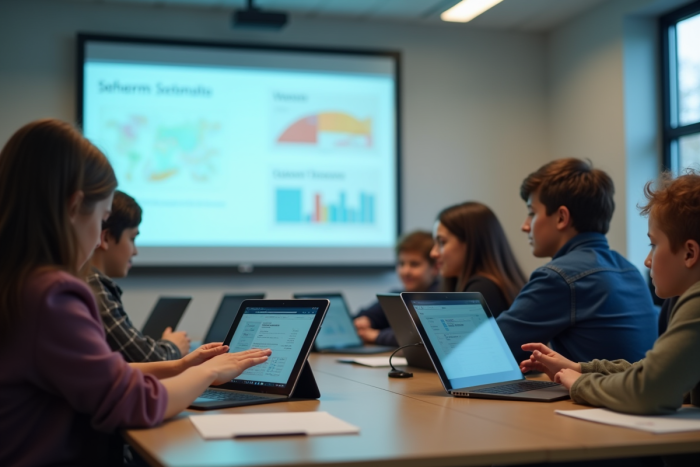
The school is becoming increasingly digital, transforming learning methods to adapt to new technologies. Students use tablets and computers to access online resources, while teachers integrate interactive tools to energize their classes. This evolution allows for diversifying pedagogical approaches and personalizing teaching according to individual needs.
This transition is not without challenges. It is essential to ensure that all students have equal access to technology and the skills necessary to make the most of it. Parents and teachers must also be trained to best support young people in this digital environment.
The advantages of connected education
The integration of digital tools into the educational system transforms teaching practices. Indeed, the use of digital platforms like ENT École 78 facilitates access to educational resources and allows for the personalization of teaching. New technologies offer a multitude of solutions to energize lessons and engage students interactively.
UNESCO, which made digital learning a priority at the Education Transformation Summit in 2022, believes that digital innovation is essential for education. It revealed that only 40% of primary schools are connected to the Internet, highlighting access disparities.
The concrete benefits of digital tools
- Personalization of learning: Teachers can adapt teaching methods to the individual needs of students, thus promoting better tracking and faster progress.
- Enhanced interactivity: Thanks to interactive tools, students participate more actively, making lessons more engaging and stimulating.
- Access to global resources: Digital platforms provide access to diverse and quality educational content from around the world.
The Rennes Academy, in collaboration with the Brittany Region and technology partners, exemplifies this successful integration of technology in education. Initiatives like these show how digital environments can enrich teaching and learning methods while developing students’ digital skills.

How to optimize the use of digital environments
To make the most of digital environments, several strategies are essential. Training plays a key role. Indeed, teachers must be trained in digital tools to effectively integrate them into their teaching practices. The DRANE – Versailles Site offers hybrid training, combining in-person sessions and asynchronous work, allowing trainees to discover and design activities on platforms like Éléa and Moodle.
- Continuous training: Teachers should undergo regular training to maintain and develop their digital skills.
- Digital skills: Tools like PIX and Pix+Edu allow for measuring and improving the digital skills of teachers and students.
The autonomy of teachers in using digital environments is fundamental. It is about enabling them to personalize teaching methods according to students’ needs. The diversity of available tools offers a multitude of possibilities to adapt educational content and make it more accessible.
Protection of personal data
The protection of personal data is another fundamental aspect of integrating digital environments into education. Institutions must establish clear and rigorous policies to ensure the security of information. According to UNESCO, less than 10% of schools and universities have implemented internal policies on the use of artificial intelligence, highlighting the need to strengthen these measures.
Digital environments must also be designed to be intuitive and accessible. Customizing display and navigation settings allows users to more easily take ownership of digital tools, thus optimizing their daily use.