Some metal fasteners accelerate the deterioration of bamboo, despite their popularity in DIY guides. The uneven growth of the stems, even from the same variety, systematically complicates standard assemblies.
Regional regulatory constraints sometimes impose unexpected fastening methods, under penalty of dismantling. Alignment or drilling errors reduce the lifespan of structures by more than 30%.
Why bamboo is increasingly appealing to amateur and passionate gardeners
Bamboo has secured a prominent place in gardens, driven by an enthusiasm that shows no signs of waning. Its strength, lightness, and flexibility exceed the expectations of those looking to combine durability with an ecological approach. Its sleek appearance and ability to fit into all styles of landscaping explain the growing success of this material for edging, fencing, stakes, or pergolas. The bamboo species available today, such as the Guadua Angustifolia imported from Colombia, showcase an unprecedented diversity. This variety, valued for its solidarity and uniformity, is now integrated into the French supply chain through a well-established import circuit.
The bamboo grove acts as a large-scale testing ground. Everyone can test varieties suited to their soil and projects. Ecological bamboo also stands out for its rapid growth and low environmental impact. Grown without fertilizers or heavy treatments, it meets the expectations of responsible gardening. Its longevity makes it a reliable ally to withstand the seasons without faltering.
Each use involves a careful selection of stems. Experienced gardeners prefer mature, well-dried culms that are free from cracks or insect traces. The use of bamboo in the garden is part of an innovation logic that respects natural cycles. To delve deeper into the methods, feel free to consult various methods for fastening bamboo and discover how to easily assemble bamboo: methods and practical tips. The possibilities offered by bamboo expand as one progresses in mastering techniques, whether traditional or more inventive.
What methods to choose for assembling and securely fastening your bamboo in the garden?
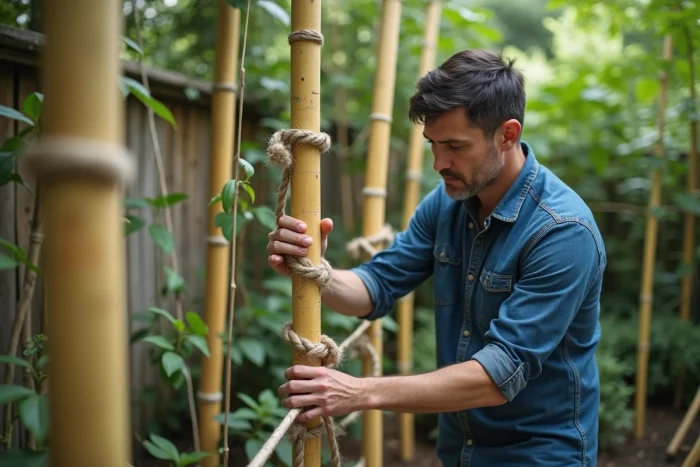
Assembling bamboo is not something to improvise. Each technique meets a specific expectation: use, strength, visual appeal, or adaptation to the selected stem. To achieve a structure that is both light and flexible, lashing is the reference technique. The sections are then connected using natural ropes, shackles, palms, or plant fibers. This know-how, passed down through generations, allows for flexible assemblies while respecting the material.
For robust constructions, drilling combined with dowels or tenons is essential. Using a drill or auger, one can penetrate the culm without weakening it, then insert the connecting piece to secure the whole. Sleeves (internal or external) are also effective for straight joints or to reinforce the structure. Their installation requires great precision and good anticipation of how the wood will behave in response to moisture.
To secure the stems to the ground or a wall, the metal plate remains the most reliable solution. It provides stability for large structures while allowing for disassembly if needed. However, the success of the operation always begins with the choice of the right material: opt for mature culms, well-dried, without defects or insect attacks. Careful drying, natural treatment, and storage in a sheltered place are guarantees of durable constructions.
Here is an overview of the most common techniques and their preferred uses:
- Lashing: provides flexibility and elegance for borders and trellises.
- Drilling-dowel: ensures the strength of stakes, pergolas, or benches.
- Sleeve: reinforces straight joints.
- Metal plate: guarantees anchoring to the ground or on a wall support.
Every garden has its method and constraints. Experience shows that the success of an assembly depends as much on mastering the technique as on the choice of materials. Taking the time to care for the installation is to ensure a setup that will last through the years without faltering.
Practical tips for achieving solid, aesthetic assemblies suited to each use
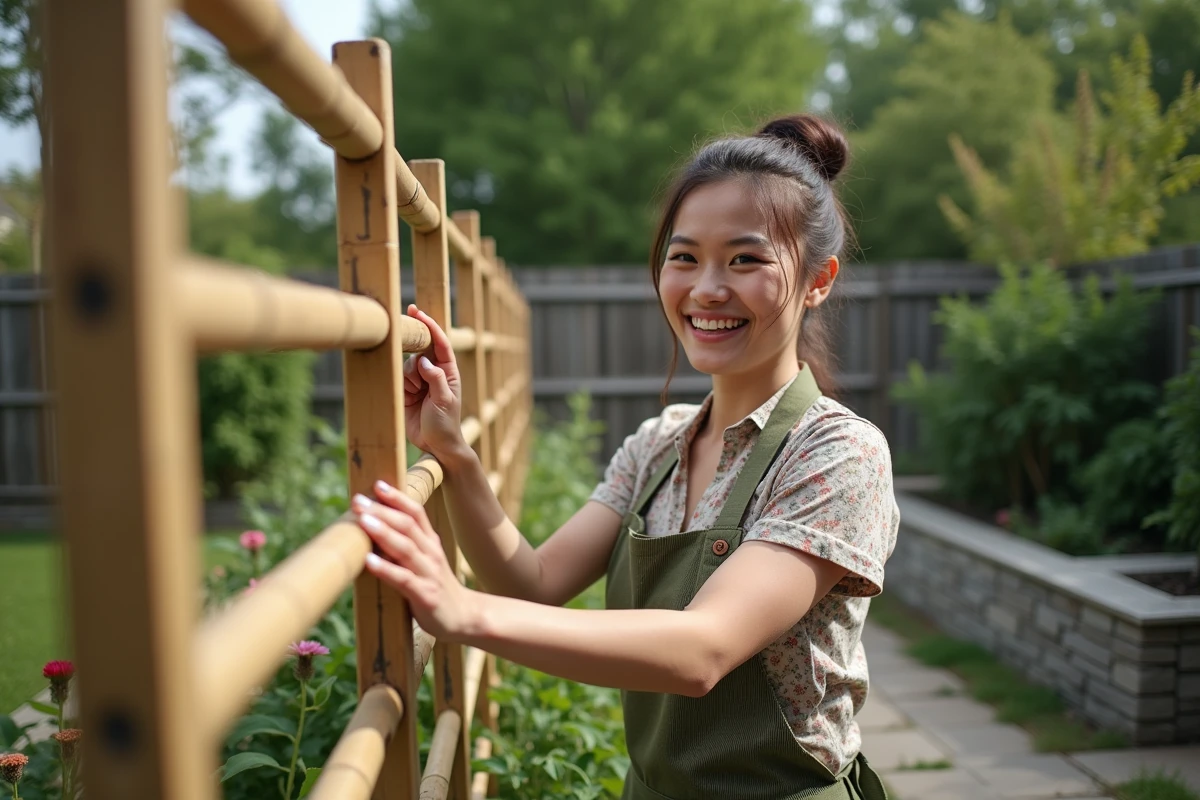
To ensure the longevity of your bamboo assembly, the selection of materials must leave nothing to chance. Choose mature culms, harvested between five and seven years, naturally dried, without cracks or insect traces. These criteria provide the robustness and aesthetics expected, especially for borders or fences exposed to the elements.
Next comes a step often underestimated: soil preparation. For a bamboo garden border, the area must be cleared and leveled, then the soil lightly loosened to ensure stability. For vertical structures, a sufficiently deep installation, followed by careful compaction of the soil around each post, makes all the difference. Depending on the context, fastening may be reinforced with plates or ropes.
Regular maintenance of bamboo extends the lifespan of the assemblies. Applying linseed oil mixed with turpentine, or a suitable varnish, protects the material from weather attacks. This simple gesture limits the appearance of cracks, rotting, and premature aging.
To stay on track, here are some key points not to overlook:
- Always check the quality and maturity of the culms before starting.
- Carefully prepare the location for optimal strength.
- Renew maintenance each year to preserve the flexibility and beauty of the bamboo.
A successful installation is this alliance between material choice, adjusted technique, and regular follow-up. Bamboo reveals all its potential when given this long-term attention. Try, test, observe: the garden will reward you, season after season.