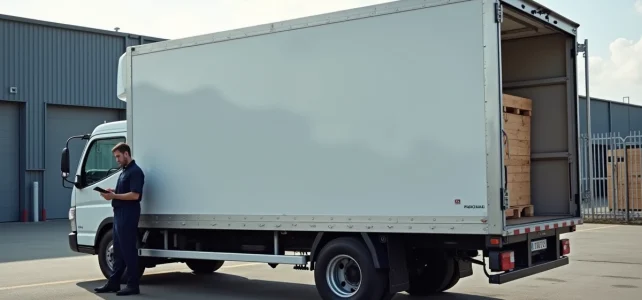
The threshold of 3.5 tons of GVW (gross vehicle weight) marks the regulatory dividing line between light commercial vehicles and heavy trucks in France. A driver holding a category B license can take the wheel of a utility vehicle up to this limit, without additional training or specific medical examination. This administrative boundary structures the offerings of manufacturers, the fleet choices of companies, and the access constraints to low emission zones.
Decreasing payload on 3.5 tons: what recent technical sheets reveal
Models marketed in the early 2010s offered, at the same GVW, a significantly higher payload than current vehicles. The reason lies in the gradual increase in the weight of onboard equipment: driver assistance systems (ADAS), pollution control devices (SCR, particulate filters), and, for electric or hybrid versions, traction batteries.
Comparing the technical sheets of an Iveco Daily, a Mercedes Sprinter, or a Renault Master from 2010 with their 2023 equivalents highlights this erosion. The GVW remains at 3.5 tons, but the payload decreases by several hundred kilograms depending on the configurations. For a construction artisan or an urban logistician, this means that a new van carries less cargo than an equivalent model from ten years ago.
This phenomenon pushes some professionals towards higher GVW versions (4 or 4.5 tons), which then requires a C1 license. Others opt for lighter bodywork (aluminum, composites) to preserve a few dozen kilos of payload. Those who want to know everything about 3.5-ton vehicles should check the actual empty weight on the registration certificate rather than relying on catalog data.
Shortage of C licenses and massive shift towards 3.5-ton utilities
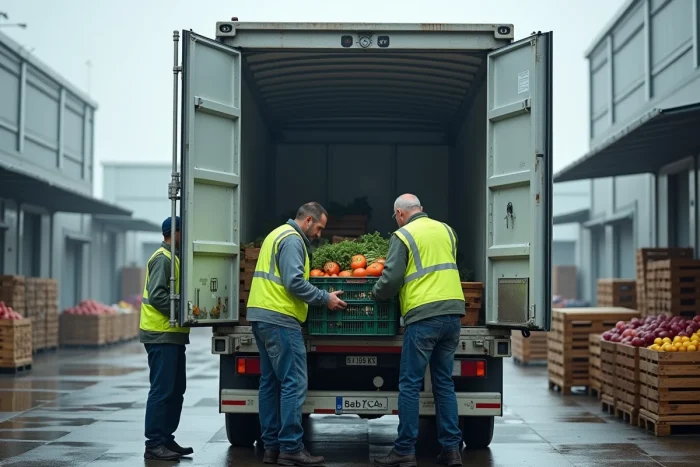
Field reports published by long-term rental companies (ALD Automotive, Arval, Fraikin) between 2023 and 2024 converge on one observation: 3.5 tons are absorbing an increasing share of the flows once handled by heavy trucks. The difficulty in recruiting drivers with a C license, combined with the cost of training, encourages e-commerce, light construction, and urban logistics companies to increase rotations with light utilities.
This over-utilization has measurable consequences. Annual mileage per vehicle is increasing, which accelerates the fleet renewal cycle. A 3.5-ton van used for intensive urban delivery reaches its replacement threshold much faster than a vehicle assigned to traditional intercity transport.
Limits of this shift strategy
Replacing a 7.5-ton truck with two 3.5-ton vans does not solve everything. The overall operating cost (fuel, maintenance, insurance, tolls) can exceed that of a single heavy truck, not to mention the cumulative carbon footprint. The available data does not allow for a conclusion on a universal break-even point, as it depends on the type of goods, the density of routes, and the price of fuel.
3.5-ton chassis-cab and last-mile logistics in urban areas
Studies by ADEME and France Logistique published in 2023 document a clear trend: the chassis-cab configuration with specialized body is gaining ground over the classic panel van. The reasons are the constraints of low emission zones (ZFE) and the evolving needs of urban delivery.
Last-mile delivery professionals now prefer several types of bodies mounted on 3.5-ton chassis-cabs:
- Isothermal or refrigerated body for food delivery at controlled temperature, which represents a rapidly growing segment with the rise of online food shopping
- Sliding curtain body, suitable for routes with frequent stops, allowing for quick lateral loading and unloading in city centers
- Body with liftgate, essential for handling pallets at sites without unloading docks
This diversification of body types explains why the simple panel van, long the default configuration, is declining in registrations of urban professional fleets.
Licenses, regulations, and vehicle categories: what applies to the 3.5-ton segment
A vehicle with a GVW not exceeding 3,500 kg falls into category N1 of the European road code (light commercial vehicle). A category B license is sufficient to drive it, including with a trailer whose GVW does not exceed 750 kg, provided that the total does not exceed 4,250 kg.
Beyond this combination, the B96 license (seven-hour training) or the BE license becomes necessary. For vehicles exceeding 3.5 tons of GVW (4 or 4.5-ton versions offered by some manufacturers on the same mechanical base), the C1 license applies, with mandatory medical examination and minimum initial training.
Specific constraints in ZFE
Traffic restrictions in French ZFEs directly affect 3.5-ton utilities, particularly older diesel models. Crit’Air 4 and 5 stickers are already banned in several metropolitan areas. Electric versions benefit from unrestricted access, which accelerates the electrification of urban delivery fleets, despite the acquisition cost and the loss of payload related to the weight of the batteries.
The 3.5-ton utility segment thus finds itself caught in a vise: regulations impose heavier equipment and cleaner engines, while the demand for light transport continues to grow. Manufacturers respond with modular ranges (chassis-cab, van, flatbed) and diversified engines (diesel, CNG, electric), but the actual payload remains the variable that each professional must check before any investment.