
Getting frustrated in front of a municipal portal is a classic: after fifteen minutes of going in circles, one in three residents simply gives up on their request. Yet, imagine the opposite: just a few clicks would be enough to validate a process, without any frustration or waiting for an acknowledgment of receipt. We would move from an administrative obstacle course to a digital walk in the park.
Municipal intranets are evolving, leaving behind the burdens of the past. Through this digital shift, an ambition emerges: to transform the administration into a helpful neighbor, always available, never overwhelmed. Who would have bet that a technical tool could so profoundly change the proximity between the town hall and its citizens?
Why the municipal intranet is becoming essential for local authorities and their residents
The digital management of processes is redefining the relationship between the town hall and its residents. Expectations are rising, the public service must accelerate, reassure, and open up. The municipal intranet then becomes the nerve center where every service converges, where internal communication sharpens, and where trust is woven more solidly between the city and its inhabitants.
Long tossed between disparate tools, municipal agents now have a unique platform. Gone are the endless back-and-forths: simplified human resources management, leave and absence managed in just a few clicks, secure administrative documents. Everything happens here, on an interface that first thinks of those who use it. Intranet in Amiens proves this, with instant access to civil status procedures and personal data, a concrete illustration of a platform that meets today’s demands.
- Secure storage space to safeguard sensitive data
- Digital tools designed for document management and real-time information dissemination
- Mobile application to ensure continuity of public service, even away from the office
Local authorities gain agility: agents refocus on what matters while the intranet automates everything that can be automated. The result: optimized resource management, varied tools for digital mediation, enhanced inclusion, maximum security. The digital divide narrows, and the quality of public service soars.
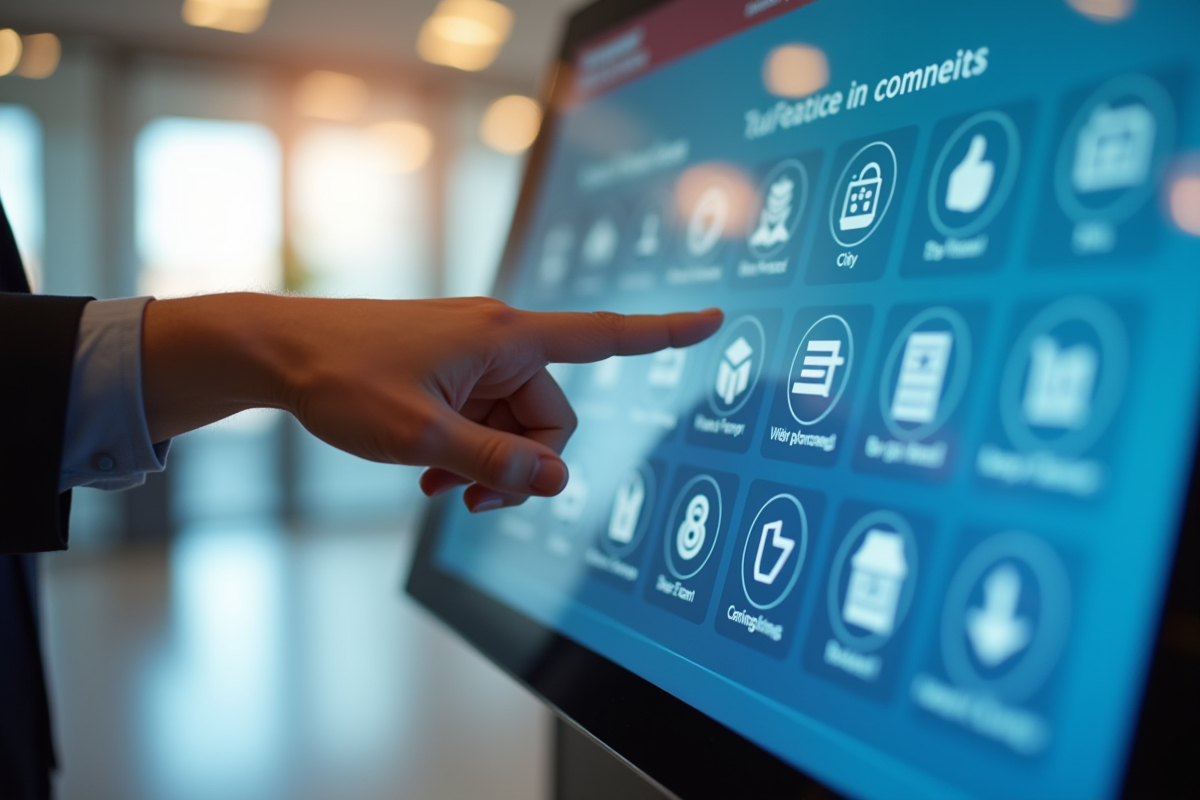
Simpler and more accessible processes: what citizens really expect from a modern intranet
Citizens no longer want to settle for digitized forms; they demand a clear, intuitive user experience, tailored to their daily lives. This is where the municipal intranet stands out. Centralized access to all online services: requests for civil status documents, registrations for activities, appointment scheduling… Queues disappear, and the administrative straitjacket gives way to simplicity.
It all starts with a clear interface: obvious navigation, up-to-date information, personalized assistance. For families, managing school, leisure, or community life becomes almost a game. Agents, on the other hand, can breathe: repetitive tasks are automated, whether it’s managing leave, tracking requests, or sending immediate notifications.
- Dashboards tailored to each user
- Instant alerts on file tracking
- Mobile application to stay connected wherever you are
Thus, the public service gets closer while streamlining its organization. Digital mediation, supported by trained agents who listen, ensures that everyone – digital or not – benefits from an optimal user experience. Resource pooling, simplification of processes: the community finally meets the demand for proximity and responsiveness that redefines the city-citizen link.
A well-thought-out intranet is the promise of a town hall that never closes its door. The file progresses, the user smiles, and the city gains what is most precious: the time and trust of its residents.