
When searching for a specific item, an accessory that can’t be found in a supermarket, or an emerging brand, the reflex remains the same: open a dozen tabs and compare. Most online shopping guides list the same names without ever explaining what truly distinguishes a good address from any random site.
In 2026, the rules changed: an online store is no longer judged solely on its design or catalog, but also on its return policy, regulatory compliance, and price transparency.
Online Returns and European Directive: What Changes for Fashion Purchases
Since June 19, 2026, Directive (EU) 2023/2673 requires any site selling to European consumers to have a visible and permanent withdrawal feature. The process must take place in two steps (expression of intent, then confirmation), with immediate acknowledgment of the 14-day right of withdrawal.
In France, the transposition by Ordinance No. 2026-2 and Decree No. 2026-3 of January 5, 2026, adds an additional constraint: a site that does not offer this feature sees the withdrawal period extended to 12 months and 14 days. The administrative fine can reach 75,000 euros for a legal entity.
This can be seen as a simple legal formality. In practice, this means that an e-shop with a beautiful lookbook but an opaque return process is no longer just inconvenient to use; it is illegal. Before splurging on a trendy store, check that the withdrawal button exists and works: it has become the first filter of seriousness.
To spot addresses that combine a sharp selection with a reliable shopping experience, the Mlle E site to explore is a good starting point, especially for fashion and accessories.

Trendy Online Shopping: Concrete Criteria for Sorting Good Addresses
Lists of “best sites” all look alike because they use the same criterion: notoriety. The same giant platforms and marketplaces appear repeatedly. This is not useless, but it does not answer the fundamental question: how to identify an online store that deserves your credit card number.
Here are the points we systematically check before recommending an address:
- The return policy is clearly visible from the product page, not hidden in the terms and conditions. Since the European directive, this is a signal of both compliance and trust.
- The displayed prices include shipping fees or clearly announce them before checkout. A product priced at 45 euros that jumps to 58 euros at checkout is the quickest way to lose customers.
- The site offers a customer service reachable by a channel other than the form (chat, phone, instant messaging). A form without a response within 48 hours is a warning signal.
- The mobile experience does not degrade the shopping journey. On some sites, the mobile version removes filters or hides product information, complicating comparison.
These criteria may seem basic. In reality, we easily dismiss a third of the stores as soon as we apply them seriously.
Online Concept Stores and Emerging Brands: Where to Look Beyond Marketplaces
The big platforms (Amazon, Zalando, ASOS) cover the volume. For trendy shopping, the finds often come from elsewhere: digital concept stores and independent designer boutiques.
The principle of the online concept store is simple: a curated selection, editorialized, with an aesthetic or ethical stance. The catalog rarely includes more than a few hundred references, which necessitates real curation work. Here, you will find pieces that no marketplace algorithm will highlight because they do not have the necessary sales volume.

The downside is that these boutiques are economically more fragile. Returns vary on this point, but several concept stores that launched in 2024 have already closed due to insufficient cash flow to absorb free returns. This is a factor to keep in mind: when spotting an address that offers unique pieces at reasonable prices, it’s better not to wait too long.
Spotting Signals of a Reliable Store
A polished design is not enough. What distinguishes a solid concept store from a fleeting site is the regularity of updates (new collections, restocks), the presence of verified customer reviews, and the explicit mention of the storage or shipping location. A site that does not specify where the packages are shipped from often hides unpredictable delivery times.
Online Shopping and Price Transparency: The Cross-Border Trap
Buying from a site based outside the EU remains tempting for some niche brands. Since 2026, customs thresholds and import VAT rules have been tightened for low-value shipments. A package shipped from outside the Union can incur customs fees that double the initial price of the product.
Serious online boutiques now display the total delivered price, including duties and taxes, before the cart is validated. This is a simple indicator: if the final price only appears after entering your delivery address, transparency is lacking.
For trendy online shopping, time is saved by prioritizing sites that ship from France or the EU. The delivery time is shorter, returns are covered by the European directive, and the displayed price corresponds to the price paid.
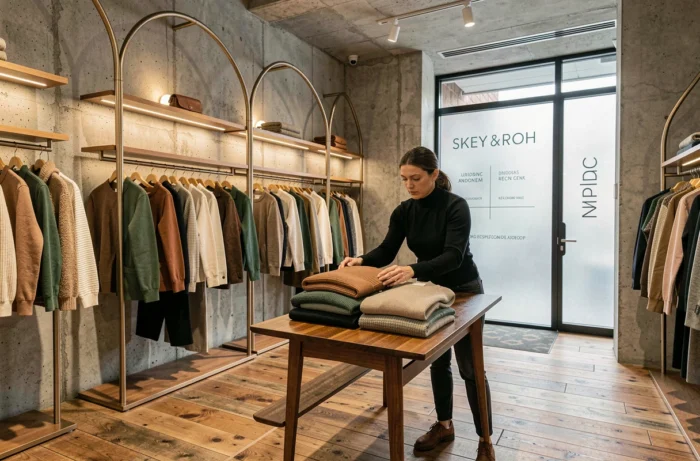
Online shopping has gained comfort but also regulatory complexity. The best boutiques are no longer those with the largest catalog or the most spectacular site. They are the ones that clearly display their return conditions, ship from the EU, and treat customer service as a real function, not a cost to minimize. Keeping these markers in mind avoids most unpleasant surprises.