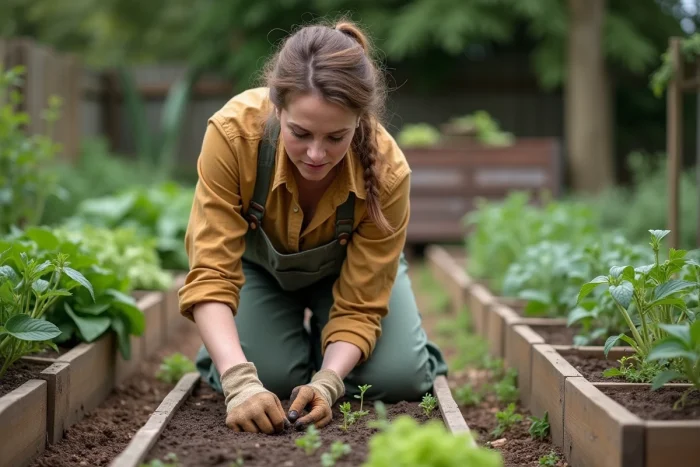
The grelinette is a gardening tool with two handles and several steel tines, designed to loosen the soil without turning it over. In an organic vegetable garden, this feature preserves the natural stratification of the soil, where the upper layers rich in organic matter remain on the surface and the mineral horizons are deeper.
Reducing the success of an organic vegetable garden to the use of a single tool would be misleading: the grelinette gives its best results when it is part of a broader strategy to limit soil work.
When the grelinette damages the soil instead of helping it
A pass with the grelinette loosens the soil to about twenty centimeters, aerates the upper horizons, and facilitates water infiltration. The problem arises when this tool is used too often or indiscriminately.
Organic farming advisory bodies now recommend reserving the grelinette for the phases of planting or renovating beds. On a bed that is already cultivated and properly mulched, a new mechanical pass fragments the networks of mycorrhizae, disturbs earthworm galleries, and exposes organic matter to rapid oxidation. The living soil that the organic gardener seeks to build becomes weakened by the very tool meant to protect it.
Market gardeners in micro-farms have documented a more economical approach: after the initial creation of a bed with the grelinette, they favor permanent mulching or long-term covering with opaque tarps or woven fabrics. The soil then structures itself, thanks to biological activity, without repeated mechanical intervention. On grelinette-warrior.com, the various available models adapt to this targeted rather than intensive usage logic.
Ergonomics of the grelinette: posture and adjustments to avoid injuries
The grelinette is considered a tool that protects the back, as opposed to the traditional spade. This is true, but under certain conditions. In recent years, ergonomists working in market gardening structures have observed a rise in musculoskeletal disorders related to intensive and poorly adapted use of this tool.
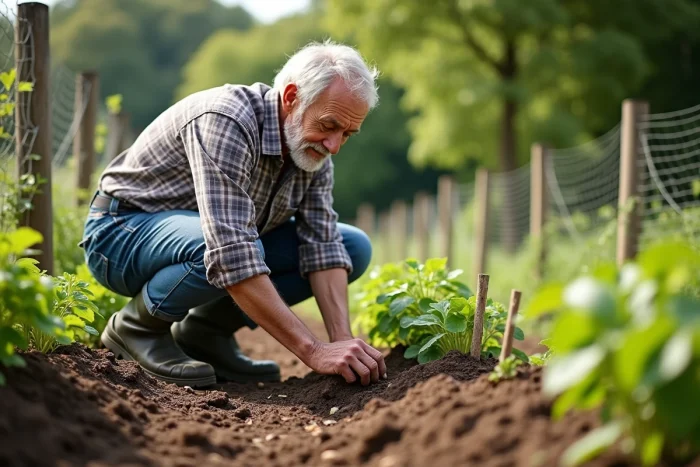
The correct movement relies on a lever action: the tines sink under the weight of the body, then the gardener pulls the handles towards them while keeping their back straight. The force comes from the legs and the pivoting, not from the lower back. Three points deserve particular attention.
- The width between the handles should correspond to the shoulder width of the gardener. A gap that is too wide forces the wrists and trapezius to compensate.
- Alternating tasks remains the best defense against repetitive movements. Alternating grelinette use, manual weeding, and planting in short slots reduces the strain on the same muscle group.
- The number of tines (three, four, or five) changes the resistance to penetration. A three-tine model is better suited for clayey or compacted soils, as it requires less force per support.
Specific training on the ergonomic use of the grelinette is developing in communities and structures for reintegration through market gardening. The reflex to force with the arms to push the tines into dry soil remains the most common mistake.
Mulching and covering strategy in organic vegetable gardening
An effective organic vegetable garden relies less on soil work than on its coverage. Organic mulching (straw, hay, wood chips, dead leaves) nourishes the soil fauna, limits evaporation, and slows the germination of weeds. Covering with an opaque tarp works differently: it smothers the existing vegetation by depriving it of light, without adding organic matter.
Combining the grelinette and covering significantly reduces the weeding of the vegetable garden and the number of tool passes needed over a season. The typical scenario: lay an opaque tarp several weeks before planting, remove the tarp, use the grelinette just once to loosen the top layer, then immediately install a thick mulch around the plants.
This sequence limits mechanical soil work to a single pass per cropping cycle. The living organisms in the soil, from earthworms to mycorrhizal fungi, then have months of peace to structure the soil deeply. The gardener saves time, and the soil gains in fertility.
Choosing ecological tools beyond the grelinette
The grelinette does not work alone. Other manual tools complement a coherent organic gardening toolkit, each addressing a specific need.
- The manure fork allows for incorporating compost on the surface without turning the soil, where the grelinette only aerates.
- The oscillating hoe (or blade weeder) cuts weeds just below the surface, without disturbing the soil structure deeply.
- The manual wheel seeder regulates the seeding density on freshly prepared beds, which limits thinning and subsequent trampling.
Each tool replaces a motorized operation while preserving the living layers of the soil. The choice of a four or five-tine grelinette model depends on the width of the cultivation beds and the soil texture: light and sandy soils can handle five tines well, while heavy soils require less resistance to penetration.
A successful organic vegetable garden relies less on the multiplication of tools than on their reasoned use. The grelinette remains a valuable lever for establishing beds, provided that afterwards, mulching, cover crops, and soil life are allowed to do the structuring work that mechanics cannot replace.