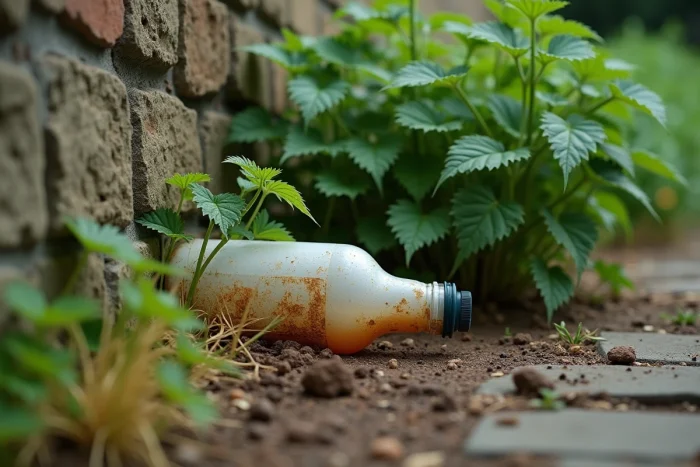
Bleach is a sodium hypochlorite solution used as a disinfectant and bleaching agent. When applied to plants, it acts as an oxidizing biocide that destroys living cells indiscriminately: plants, bacteria, fungi, soil microorganisms. Pouring bleach on nettles is akin to disinfecting an entire plot, not just eliminating an unwanted plant.
Sodium hypochlorite in the soil: the chemical reaction at play
Sodium hypochlorite, the active ingredient in bleach, releases free chlorine upon contact with organic matter. This chlorine reacts with the carbon compounds present in humus and forms organochlorines, toxic and persistent molecules.
Unlike a selective herbicide that targets a specific plant mechanism, bleach oxidizes everything it touches. Nitrifying bacteria, mycorrhizal fungi, earthworms, springtails: no link in the soil life chain is spared. This destruction of the soil microfauna is not limited to the surface. Rainwater carries chlorinated residues deep down, towards the groundwater.
Reports from organic gardeners indicate a slowed regrowth of crops for at least two seasons in plots treated with bleach against nettles. Soil fertility declines because the nitrogen cycle, which directly depends on the destroyed bacteria, is interrupted. Before seeking how to kill nettles with bleach, it is essential to understand that the product does not differentiate between the nettle and the soil that supports it.
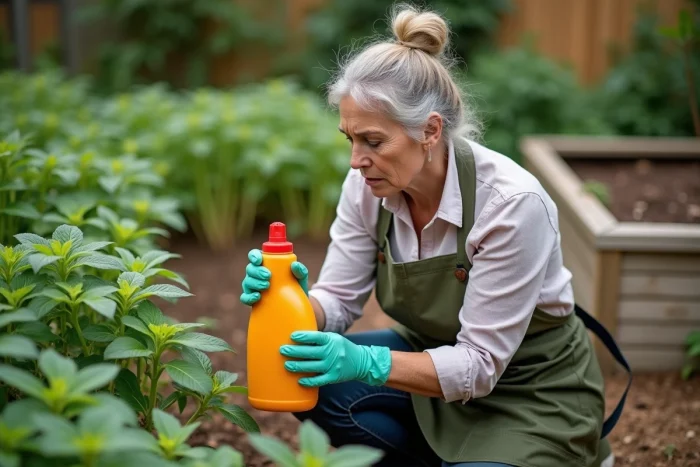
Bleach and nettles: why the weeding effect is an illusion
Bleach burns the aerial parts of the nettle within a few hours. The leaves turn yellow, and the stems dry out. Visually, the result resembles successful weeding.
The nettle (Urtica dioica) has a dense and deep network of underground rhizomes. Bleach, which acts by contact on exposed tissues, does not reach these rhizomes. Regrowth occurs within a few weeks, sometimes more vigorously, as the destruction of the surface vegetation removes competition from other plants, which are also killed by chlorine.
The concrete result: impoverished soil, destroyed local biodiversity, and nettles that return. Bleach eliminates the nettle’s rivals without eliminating the nettle itself. This paradox explains why some gardeners increase the doses, worsening soil contamination with each application.
French regulations on the use of bleach in the garden
Bleach is not an authorized phytopharmaceutical product. The decree n°2008-1219 of November 25, 2008 prohibits the use of unapproved chlorinated products for the maintenance of green spaces in France. Using bleach as a herbicide, even in a private garden, violates this regulation.
At the European level, the directive (EU) 2025/412 of January 15, 2025, strengthens the penalties applicable to the non-professional use of chlorinated biocides in gardens. Since 2024, environmental authorities have intensified their inspections. Environmental protection associations report an increase in cases of soil and water contamination by chlorinated residues from domestic uses.
The regulatory distinction is clear: bleach is classified as a biocide (intended to destroy harmful organisms in a health context), not as a gardening product. Applying it to arable land constitutes a misuse.
Methods for weeding nettles without contaminating the soil
Nettles thrive in nitrogen-rich and organic matter-rich soils. Understanding this preference allows for the selection of methods that reduce their presence without sterilizing the ground.
Pulling and covering
Manual pulling remains the most direct method. Removing the rhizomes with a fork or spade, to a sufficient depth, limits regrowth. For larger areas, an opaque tarp placed for several weeks deprives the nettles of light and exhausts the reserves of the rhizomes.
Alternatives without chemical residues
- Thermal weeding (flame or steam) destroys the aerial parts without leaving residues in the soil, but requires repeated passes to eliminate the rhizomes
- Thick mulching (fragmented branch wood, straw, cardboard) prevents germination and gradually smothers existing regrowth
- Concentrated white vinegar burns the foliage through acidic contact, with a significantly lower impact on soil life than bleach, provided it is not overused
- Planting competitive ground covers (clover, phacelia) occupies space and reduces the dominance of nettles in the medium term
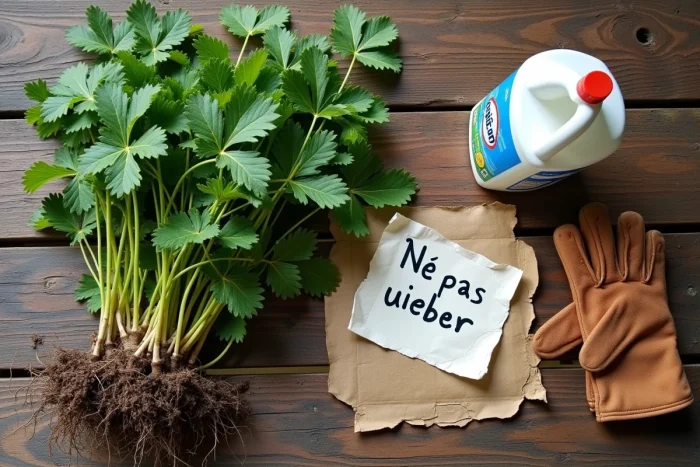
None of these methods offer an instant result comparable to bleach. Their effectiveness relies on repetition and combination. Pulling followed by dense mulching yields lasting results in one season, without compromising the biodiversity of the soil.
Keeping nettles: a sometimes relevant choice
Nettles are not just a weed. They are a host plant for the caterpillars of several butterfly species, a source of nitrogen for fertilizing manure, and an indicator of rich soil. Tolerating a patch of nettles at the edge of the garden enriches the local ecosystem without harming the main crops.
The reflex to eliminate nettles at all costs leads to radical solutions like bleach. Reevaluating the place of nettles in the garden avoids solving a false problem with real pollution. A living soil, populated with active microorganisms, naturally regulates vegetation much better than a chemical treatment that destroys its own defenses.